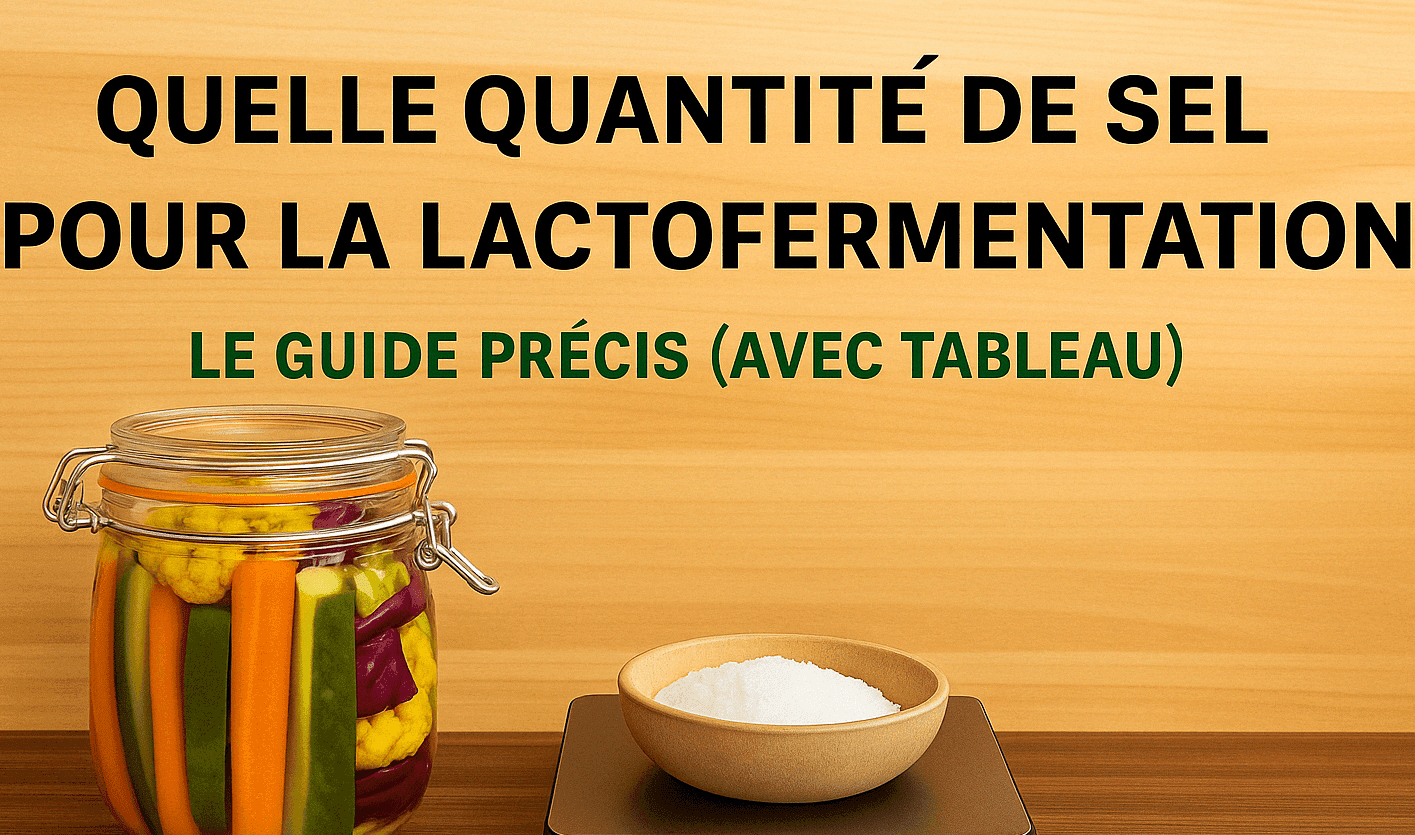
One to two per cent salt is often recommended for lactic fermentation. The suitable amount nevertheless depends on the vegetable, cut, temperature and method. At Fermentierra, we combine reliable ground rules with craft and sensory observation.
Why is salt important?
- It gives salt-tolerant lactic-acid bacteria an early advantage over many unwanted microorganisms.
- It helps preserve a crisp texture.
- It supports natural preservation.
- It directly shapes the final flavour.
Three ways to measure salt
1. Percentage of vegetable weight – dry salting
Suitable for cabbage or grated carrots. For 500 g of cabbage, 1% is five grams and 2% is ten grams of salt. Fermentierra often prefers 1.2 to 1.5% for flavour when the recipe and conditions are suitable.
2. Percentage of water weight – brine
Suitable for larger pieces such as cauliflower or pickles. Fill the jar with vegetables and cover them with brine prepared separately. For 500 ml of water, 2% is ten grams and 2.5% is 12.5 grams. Making two identical jars with slightly different salt levels can reveal the difference.
3. Percentage of total weight – water and vegetables
Fill the jar with vegetables and water, then weigh the contents without the jar. A total of 300 g cabbage and 200 g water is 500 g; 1% is five grams of salt. This method is especially easy for beginners to follow.
| Method | Calculation | Guide | Salt for 500 g |
|---|---|---|---|
| Dry salting | Vegetable weight | 1–1.5% | 5–7.5 g |
| Brine | Water weight | 2–2.5% | 10–12.5 g |
| Total weight | Water and vegetables | 1% | 5 g |
Which salt?
Unrefined grey sea salt or mined rock salt without additives are suitable choices. Recipes may favour non-iodised salt without anti-caking agents because additives can affect flavour, cloudiness or the progress of fermentation.
What if the amount is wrong?
- Too little: The start may be less stable and the risk of an unwanted fermentation can rise.
- Too much: The result is very salty and lactic fermentation may begin more slowly.
Fermentierra often uses 1.5% as a starting point. This is not a universal safety guarantee: use a tested recipe and clean equipment, keep vegetables below the brine, and monitor time, temperature, smell and appearance.
Quick answers
Can I taste during fermentation?
Yes, with a clean utensil and only when the appearance and smell are normal.
Is absolute precision necessary?
A scale makes results repeatable and is especially helpful for beginners. Sensory judgement complements measurement; it does not replace safe ground rules.
Can I mix vegetables?
Yes, provided the cut, salt level and fermentation conditions suit the recipe.
Intuition on a safe foundation
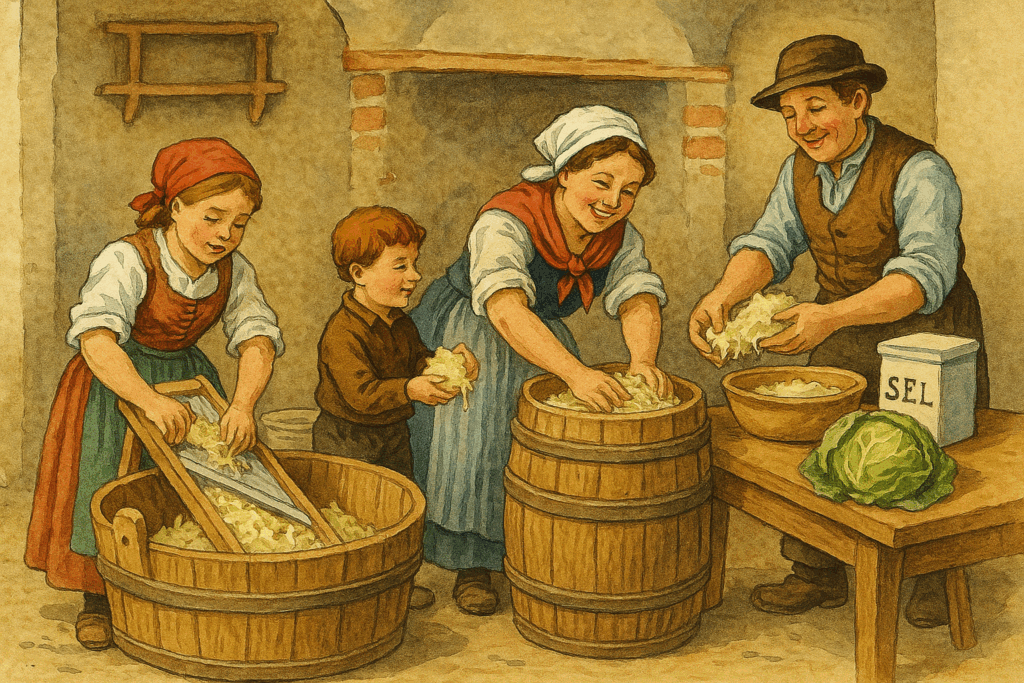
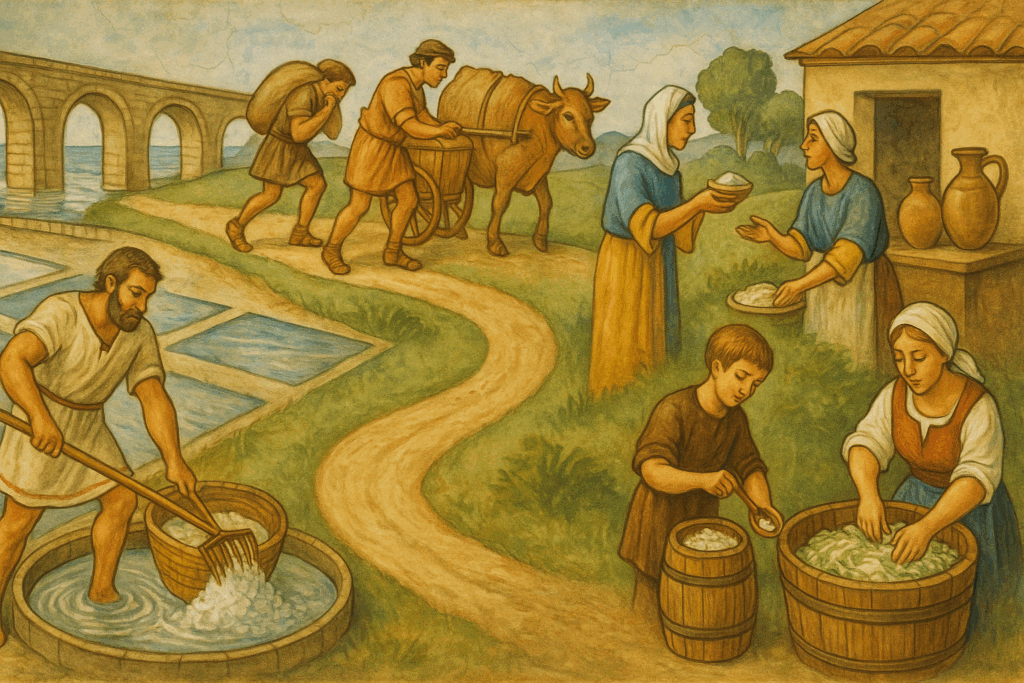
Salt gives the desired microorganisms an initial advantage. Precision scales did not exist for most of history; today we can combine experience with measurement. Taste, observe and learn, but do not treat salt as the only safety factor.