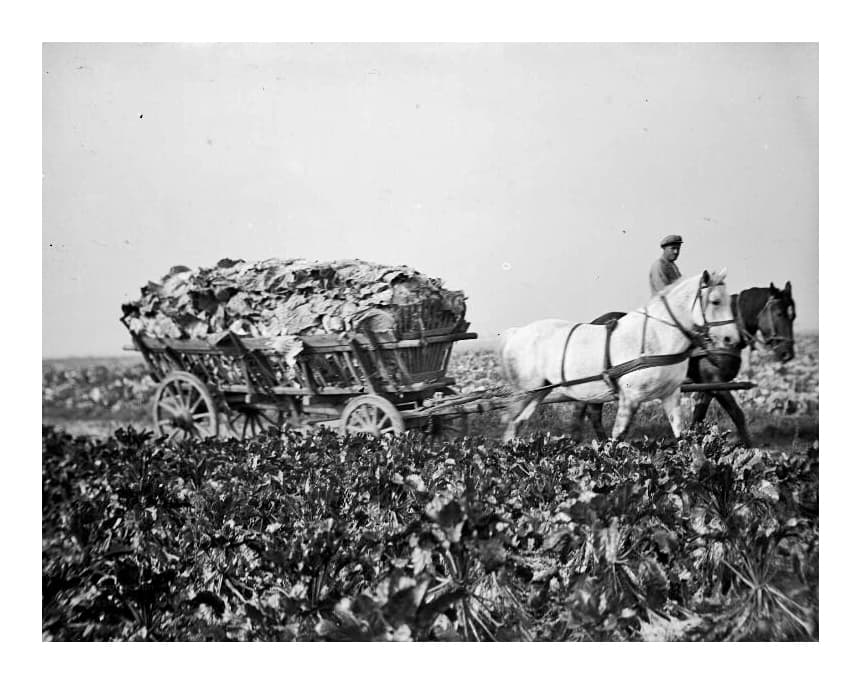
There was a jar at the back of the cellar. In my grandmother’s house, in her grandmother’s house – in almost every farming home in Europe, Asia, Africa and South America. It carried no label and had no expiry date. The people eating from it did not know they were consuming Lactobacillus plantarum. They simply knew that this was how food was preserved, and that it tasted good.
What drives Fermentierra is the elemental side of whole-food eating rather than the search for a miracle pill. To understand why, we need to look back – not to idealise the past, but to see what we have lost and what is worth recovering.
Knowledge as old as agriculture
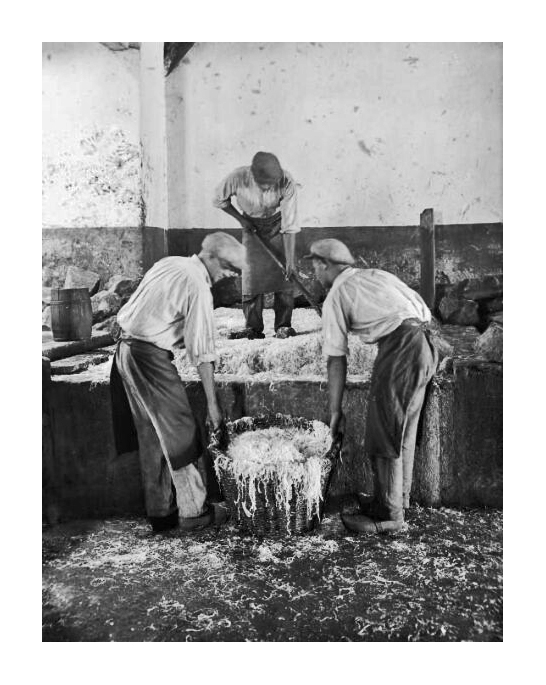
Food fermentation is probably humanity’s oldest biotechnology. Long before anyone understood bacteria, or even had a word for the process, people noticed something essential: in the right conditions, certain foods changed, lasted longer and became easier to eat.
- Kimchi, Korea: More than 2,000 years of fermenting cabbage, radish and chilli; vessels were traditionally buried to maintain a steady temperature.
- Sauerkraut, Germany: Documented since the Middle Ages and carried on ships as a source of vitamin C.
- Miso and natto, Japan: Centuries-old soya ferments; miso is documented from the seventh century and became an everyday, protein-rich food.
- Lassi and idli, India: Fermented milk and fermented rice have been pillars of daily food across the subcontinent for centuries.
- Injera, Ethiopia: A teff flatbread fermented over several days, developing organic acids and its characteristic flavour.
- Preserved lemons, the Maghreb: Lemons fermented in brine and used in tagines for generations.
What stands out is the universality. Every agricultural civilisation developed its own fermentation techniques – without sharing recipes, simply by observing and helping along what nature offered.
What the twentieth century put on ice
Refrigeration, pasteurisation and industrial food production transformed our relationship with preservation within two generations. There were good reasons: these innovations saved lives, reduced food-borne disease and helped feed billions of people in an urbanised world.
Yet something was also lost. Pasteurisation removes pathogens, but it removes living cultures too. Industrial standardisation favours stable, uniform and predictable products – qualities that living foods cannot fully possess. One jar of Shanti Chou will never be identical to the next: fermentation is alive and varies with the season, the vegetable and the temperature.
“Fermentierra is driven more by the elemental side of whole-food eating than by the pursuit of a miracle pill. We are not against modernity, but we question its urge to keep rushing forwards.”
When science caught up with intuition
Modern research now investigates what traditional cultures practised intuitively: the gut–brain axis, the role of the microbiome and changes in nutrient availability after fermentation.
Our great-grandmothers had not read those studies. They had generations of practical observation, passed on through gestures and recipes.
Recovering knowledge without naive nostalgia
Fermentierra is not interested in recreating the past. We do not ferment because it is “how things used to be”; we ferment because the process is alive, creates flavour and preserves food.
Food sovereignty also means knowing where our food comes from and understanding what transforms it. This is not about rejecting industry wholesale, but about making informed choices. The jar in the fridge continues a form of collective intelligence that humanity developed over thousands of years.
Our food choices create the reality in which we live. Fermentation included.
Read next: The whole world eats fermented food →
Note: This editorial article is for general information. References to scientific research do not constitute medical advice.