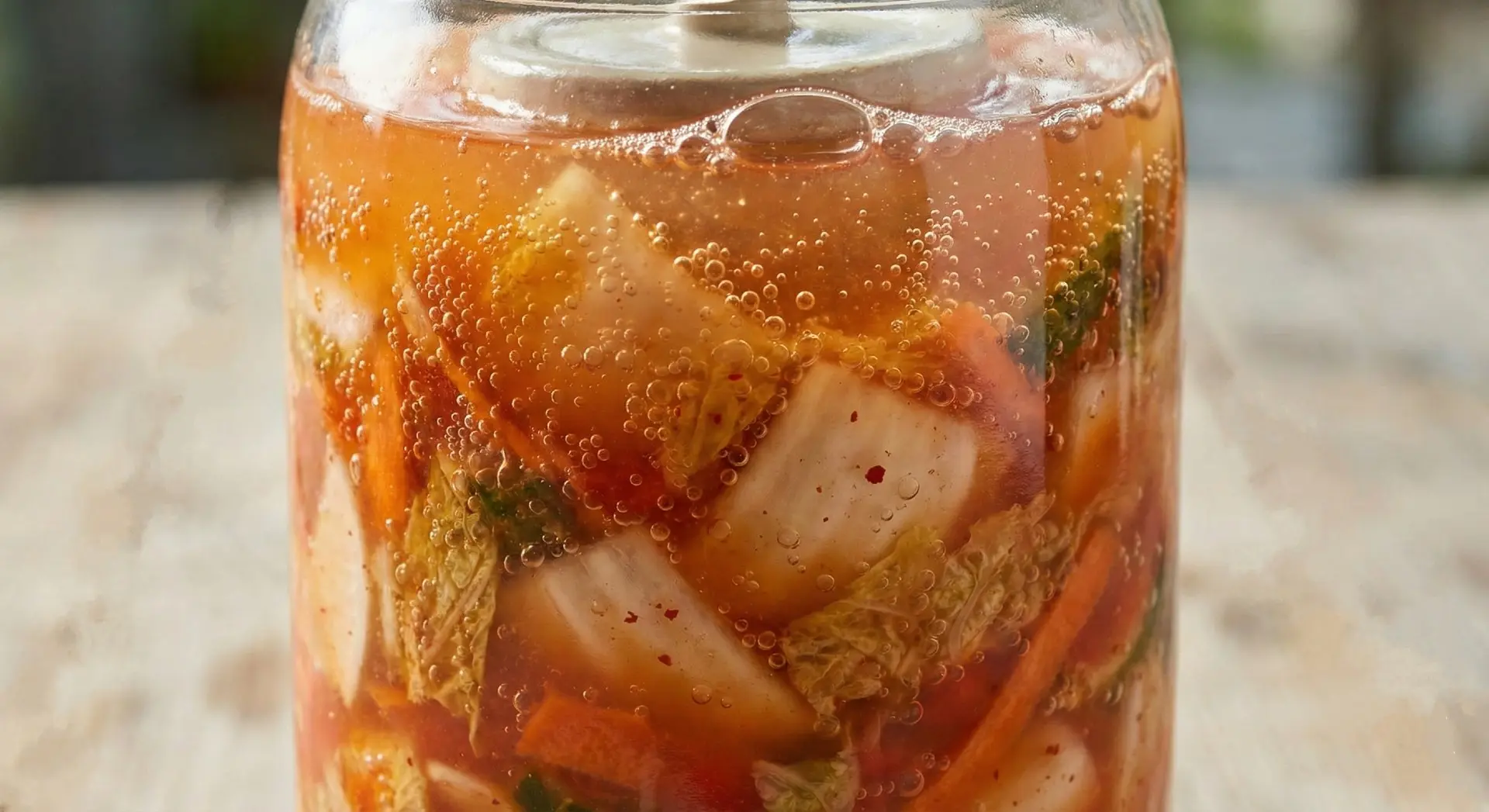
Technical terms are now used to explain what our ancestors did through experience. Science is a valuable ally, but detail can sometimes obscure the wider picture. Marketing now attaches “probiotic” to many promises. Yet most fermented foods do not automatically qualify as probiotics: a precisely identified strain must be present in an appropriate amount and demonstrate a benefit in studies. ISAPP explains the distinction.
Does that mean we must wait for every new study before trusting a practice handed down for thousands of years? Fermentation fed civilisations and preserved their food long before anyone examined it under a microscope.
From the maker: Not every mouthful needs a scientific health promise. Paying attention to your own digestion, energy and tolerance can bring inherited knowledge together with personal experience – without turning either into a medical guarantee.
Pre-digestion: when microorganisms do some of the work
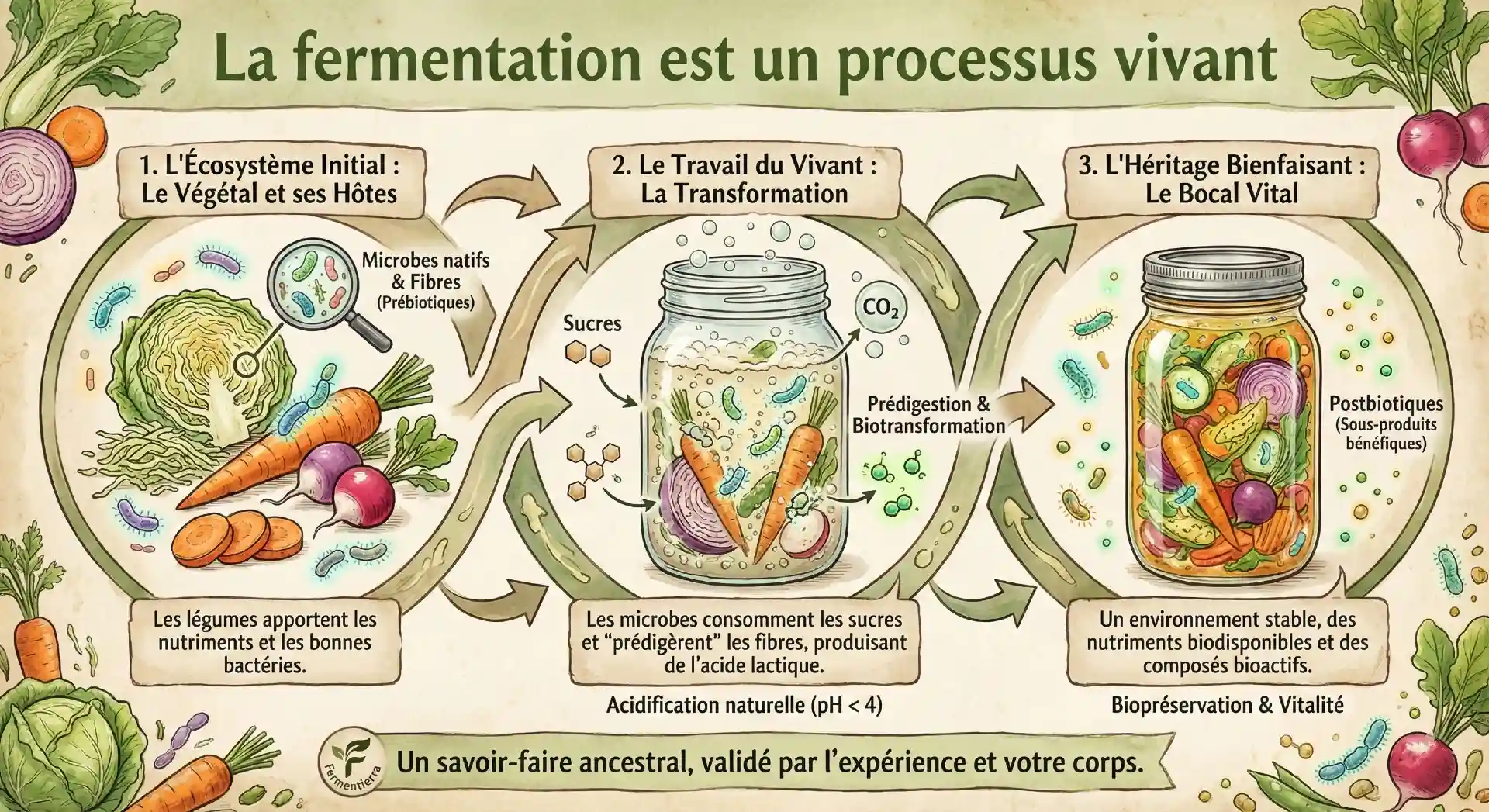
Before the first bite, microorganisms use plant fibres and sugars as a substrate. In doing so, they produce compounds including lactic acid and alter complex structures. Fermented vegetables may therefore feel different to digest from the same vegetables raw; responses remain individual.
Living food is not medicine; it is part of a balance
Fermentation was not invented to “cure” the microbiome, but to transform and preserve food. Lactic-acid bacteria lower the pH, making it harder for many unwanted microorganisms to grow. Safe preparation, clean working practices and suitable recipes remain essential.
Food sovereignty also means observing your own body carefully. That does not replace diagnosis or treatment, but it can help you choose food consciously and with pleasure.
Trusting our inheritance
Knowledge handed down through practice has real value alongside laboratory analysis. Fermentation is a conversation between soil, time, microorganisms and the body. A forgotten jar in the fridge can be an invitation to rediscover that connection without pressure.
How to escape the “lonely jar syndrome” →
The “extended microbiome”
Modern research explores fermentation as a form of digestive work that takes place outside the body. A paper in Cell Metabolism discusses the human HCA3 receptor and signals generated by microbial metabolism. It is a fascinating field, but not evidence that any one food prevents or treats disease.
Cultivate a relationship with living food
- Pink-Chi: mild, pink and crunchy – an approachable introduction.
- Suisse-Chi No. 2: a distinctive curry profile joining creativity with fermentation craft.
Discover Pink-Chi → · Discover Suisse-Chi No. 2 →
Note: This article brings research together with the Fermentierra philosophy. It does not replace medical advice.